chapter 3. the time

Naturally, I have not accomplished any of the goals I set for myself in my last post. I’ve had the tab with Cortazar’s short story open for the whole week. Sometimes I opened it and read a paragraph but I would get no response and close it. I don’t think I failed, I just think the task lost its relevance and proved to be ineffective. Over the holidays, I felt too drained to produce anything at all so I indulged in laziness. It is Monday and I have been sitting at the library since 7:30 am trying to finish this post because I need to make a presentation about this project today. 
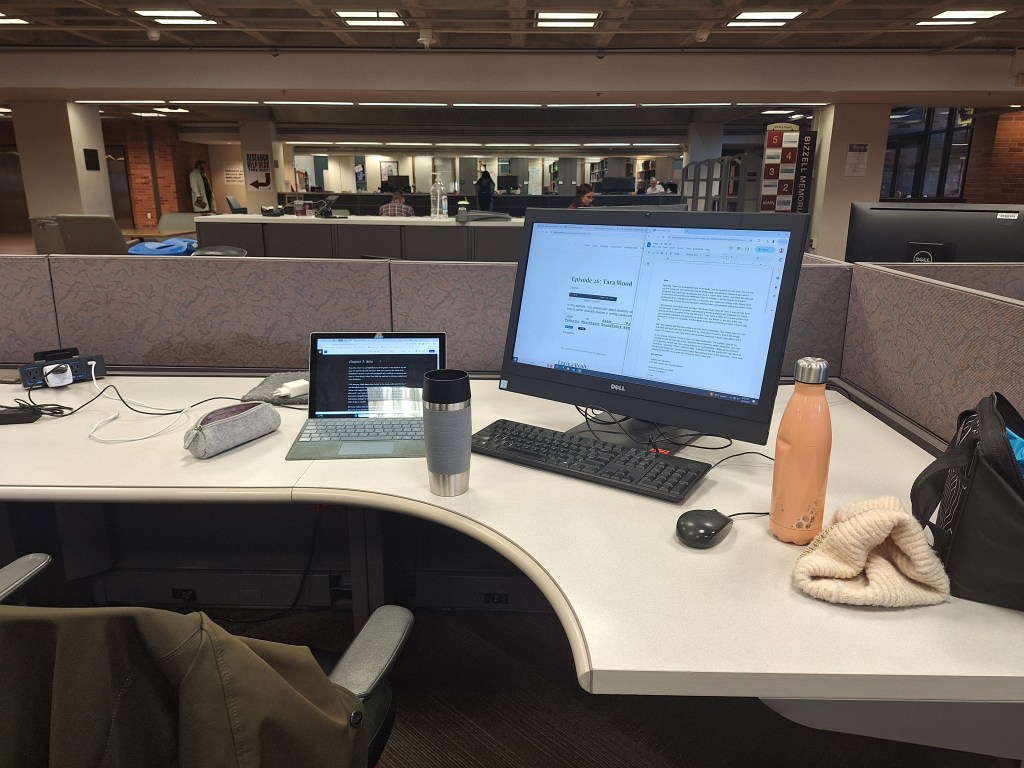
I can only focus at the University library it seems. Two screens and time pressure helped a lot.

I did, however, think about what the hair in the dream could stand for: loss. It was the hair from my own head. It came to me while I was preparing to take a shower and imagined the tidious process of having to gather all the hair afterward. I was trying to listen to O, a new person, but I get constantly distracted with gathering up all the hair I lost before. In the face of the new information, losing O is inevitable, and the dream is me facing something I reject in day-to-day life.

But I also realized that this story needs a bit more time to marinade. Time needs pass so I can look back and figure out what it all meant for me. If the story is a pizza, time is the tomato sauce. Of course, you can make pizza without tomato sauce but I doubt I’d be able to eat it. 

To my surpirse, however, I wrote a poem! Or rather song lyrics. The melody came to me probably around seven years ago when I dreamed about becoming singer-songwriter, and ever since then this melody has been coming back to me. Unfortunutely, in one of my emo-depressive-dramatic episodes I deleted hundres of voice recordings of my songs thinking “It is all meaningless! I will never write another song again anyway!”. It always felt like the words were right there at the tip of my tongue but I simply couldn’t catch them and put them in the right order. I have been playing around with it for a week but here is the draft I have now.

Fox Sparrow Adult (Red) by Evan Lipton/Macaulay Library. Source: Cornell Lab. All About Birds.

fox sparrow

I admire your devotion,
your high cause, your sacred mission.

Don’t deny that in your Bible
my love is inaspicious.

I know.
You’re a little fox sparrow
Surviving cruel winter snow. Surviving harsh winter cold./cruel thunderstorm.???
So I can’t/mustn’t fall for you.

Your fingers … reed
like an oath, like a ritual.

What a shame – in your recital
my song is intermission.

I know.
You’re a little fox sparrow
Surviving cruel winter snow.
So I’m not falling for you.

Your eyes flicker in the darkness,
a portal to the fourth dimension.

I hope behind your hidden silence/battles
My voice/hand is intervention.

I know.
You’re a little fox sparrow
Surviving cruel winter snow.
So I have fallen for you.

The only part I was always convinced about was, “So, I am not falling for you,” so I kept revolving around it. I had certain rhymes or words like “mission” or “unambitious,” but I couldn’t make any sense of them. It turns out that the events of seven years later were to bring all the right words into the palm of my hand and line them up beautifully. However, I decided to make the poem more dynamic – first, prohibition; second, denial; and finally, surrender. Some parts are flaky, and I am still deciding what to do with the others.

This experience made me think about the concept of time in writing. My original idea for this blog was to work on my story daily for about a week, documenting and sharing my experience in a series of blog posts. Life interfered, and things didn’t go as planned in the story. Uncertainty…The question remains: should I regard my failure to achieve set goals as something positive, negative, or perhaps neutral? 
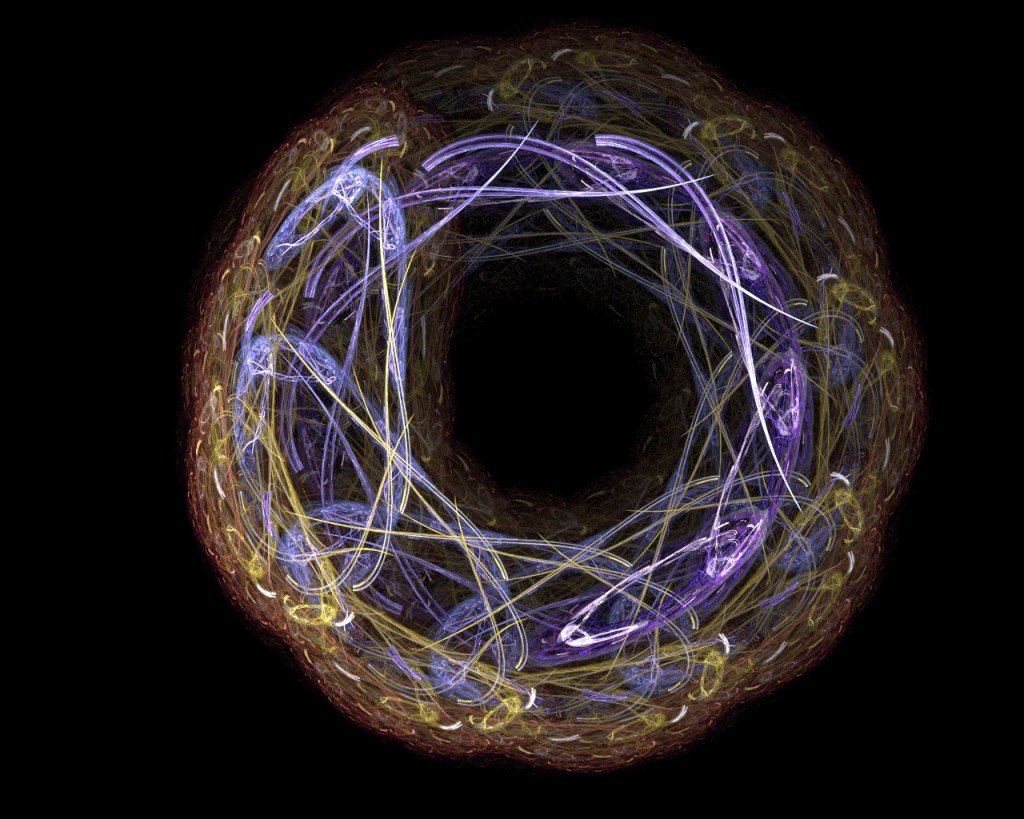
Ball of Yarn. by trickstyle2 Source: DeviantArt

Tara Wood, an assistant professor at the University of Northern Colorado, challenges the normative concept of time and introduces the concept of crip time in the Pedagogue Podcast. Wood researches alternative writing pedagogies aiming to make writing and teaching writing accessible and inclusive for everyone. She talks about ableism and how accepted writing conventions privilege the able body and marginalize any kind of disability.

Wood explains that the normative concept of time is “the idea that people produce at certain intervals that are predictable and quote-unquote normal.” I am an able-bodied (and perhaps minded) writer, but I, too, struggle with the unpredictability of the writing process and the amount of time expected to be spent on writing. Although Wood discovers this concept within the ‘writing with disabilities in a college classroom’ framework, I would argue that it applies to all kinds of writing and all kinds of writers. It’s just that people who deviate from the ‘normal’ make us question what and why we even accept to be ‘normal’ and who the hell decides on these things. 

The solution Wood offers and incorporates in her teaching practice is changing expectations from individuals and not comparing them to each other or the so-called norm. The crip time means accepting that time works differently for different people; time is not linear like “an uncooked spaghetti noodle” but rather “a ball of yarn.” In a nutshell, time is messy, and there is no way of predicting how your yarn ball will decide to unwind. You might develop strategies for unwinding balls of yarn, might gain experience from unwinding other balls of yarn, might discuss unwinding yarn balls with your therapist but ultimately, you have no control over what kind of ball of yarn you’ll end up with in your hand each particular time. Sometimes, your preparation pays off, and you unwind your yarn ball within a day. Sometimes, trying harder only makes it worse, and you have to put it aside for seven years, and one day, you just pull lightly, and it all goes loose. And you have to be comfortable with that. 
chapter 2. the dream

It finally happened. I came up with a new short story idea. I did not actually come up with it – it came to me in a dream, as usual.

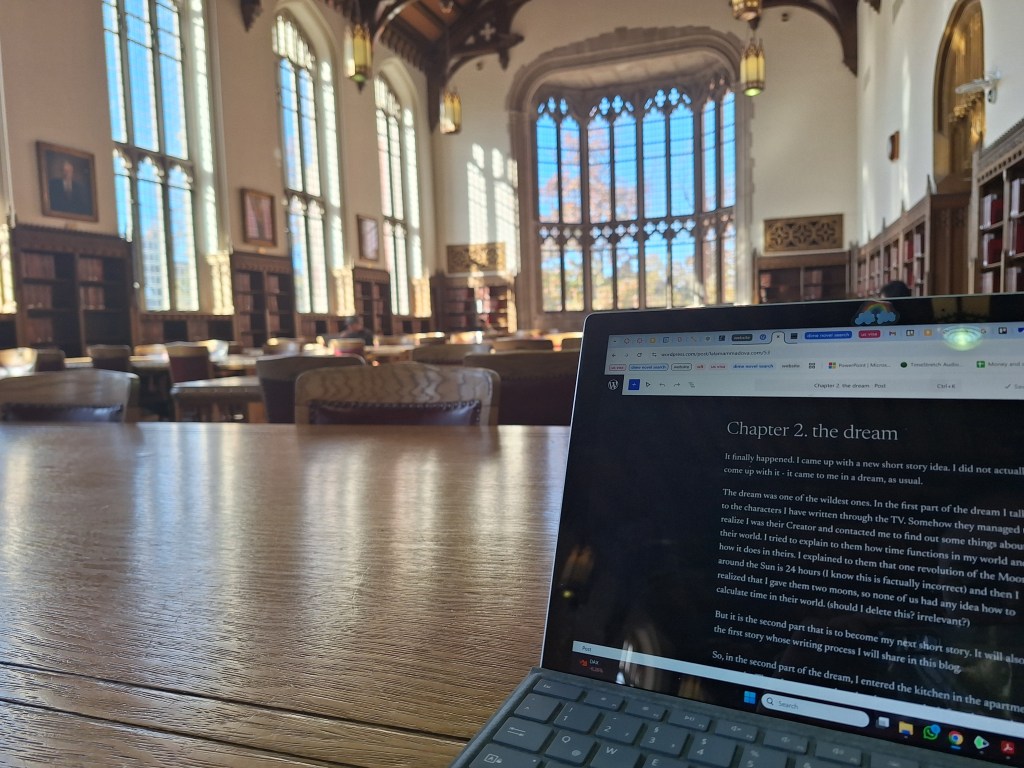
today’s location: Bizzell Memorial Library.

The dream was one of the wildest ones. In the first part of the dream, I talked to the characters I had written through the TV. Somehow, they realized I was their Creator and contacted me to learn about their world. I tried to explain to them how time functions in my world and how it does in theirs. I explained to them that one revolution of the Moon around the Sun is 24 hours (I know this is factually incorrect), and then I realized that I gave them two moons, so none of us had any idea how to calculate time in their world.

But it is the second part that is to become my next short story. It will also be the first story whose writing process I will share in this blog.

So, in the second part of the dream, I entered the kitchen in the apartment I grew up in. There, I saw my mother cleaning up on the left and a certain person, I will be referring to as O, doing the dishes on the right. O started telling me about their school years. O was taught Literature instead of Physics class at school, and in that class, they had to complete a creative writing assignment for finals. The teacher criticized their story and failed them. But because it was a physics class, now there is an F on their record for physics. Recalling the memory was so traumatic that O lay on cold kitchen tiles to take a break.

O tried to tell me more about themselves, but my mother kept interrupting us. She kept on telling me to gather up the hair. The hairs were everywhere: on the floor, in the sink, on the pipes (there weren’t many things in the kitchen). Whenever I gathered the hair and wanted to keep on having a conversation with O, my mom would barge in and tell me to clean up the hair. But the more she came, the more I cleaned, the more the hair multiplied! Eventually, there were strands of hair tied around the pipes with a nod. I was trying to untangle the nod, and O gave up on telling me about their lives and decided to help me with the hair instead. I woke up.

the dream is over. the new day is here.

Most of my creative writing ideas come to me in dreams. I love them because they are so absurd and chaotic that I am sure I would not have been able to come up with them while awake. But this method entails an insecurity: I have no control over my dreams. I have no idea when and if I ever see a dream with an element worth writing about. Worst of all, such dreams never have an ending, but stories do. Stories have to, whether I want it or not: a happy ending, a sad ending, an absurd ending, a bad ending, an open ending – one way or another, there is a last sentence, and there is no way to escape it. And I have NO IDEA what it is going to be. Plus, I need to figure it out while writing and while awake.

This unknown and unfamiliar territory scares me the most about creative writing. Starting is rarely a problem for me (even though I heard from other writers that they struggle with it). I know that I can start somehow and once I reach the end, I can go back and adjust the beginning. Even that paragraph that I wrote about the dream is, in a way, a beginning already. But the ending is the worst. It’s like entering a wild jungle completely naked, with no food or water, not knowing if you can survive and come out alive, not knowing if there is a way out at all. Staying out of the jungle is not an option either. Staying out of the jungle means running away from your fears and staying in your comfort zone. I know for sure that if I stay out of the jungle, no story will be written, the dream will be forgotten, and I will be miserable because I will keep on thinking, “What could have happened if I actually did write that story?”

To calm myself down, I will analyze the story for a while – do some preparatory work to pretend that I am not entering the jungle naked and with no supplies. In my experience, sometimes my provisions work, but sometimes they are completely useless. Still, I am not at a place where I can just bungee jump into the middle of the jungle. Perhaps in the future, but not now. Therefore, the plan is to think about what the story could mean psychologically and how I can put it in writing. For example, I need to take into account that my feelings toward A are more than just friendly, so the fact that my mom kept messing it up is not surprising at all. Also, I think I remember reading a similar story by Julio Cortázar where tiny rabbits kept multiplying. I need to find and read that story to see how a different author handles the same element of magical realism (is my story magical realism? Do I want it to be?).

Now that I have an action plan, I can start working on the story without actually writing it. Writing scares me, so I will postpone it for a while. Plus, I have things I need to write for my university classes. They, naturally, hold a way higher priority! On the one hand, it is sad that I have to put things I want to do aside and do things I rather have to do. On the other hand, something I learned from my Creative Writing class is that creative constraints are known to enhance creativity .

trailer for von Trier’s The Five Obstructions

The Danish film director Lars von Trier explores how obstructions and limitations impact our creativity in his documentary film The Five Obstructions. Lars von Trier challenges his favorite director, Jørgen Leth, to recreate Leth’s movie The Perfect Human five times. But each time he gives him a new obstruction. The first obstruction says the movie must be made in Cuba, and the second is that it must be made in a miserable place. Surprisingly, the third obstruction turned out to be the most challenging for Leth – no obstruction. I find this interesting because complete creative freedom is a bigger constraint than a certain limitation. I also postpone my creative writing to a certain time when I have no assignments to complete and have more free time. Honestly, though, whenever I find myself in a period like this, it is even harder to bring myself to write. There are so many options that I cannot choose one.

I am writing this part of the blog while sitting at the University of Oklahoma’s Bizzell Memorial Library (the old wing reminds me of Hogwarts dining hall). My class starts in 24 minutes, and it is in another building. So, I must rush if I want to be there on time. I have only been working on it for about 30 minutes because I had an assignment to submit before that. I had no Wi-Fi at my apartment, so I decided to come here, hoping the environment would make concentrating easier (plus, I despise that place). And it worked. The lack of time and the rush literally forced me to let go of criticism and fear and pushed me toward working faster. Of course, taking this approach too far might have unhealthy outcomes, but it still makes me think about how I can incorporate obstructions into my writing process.